
Combining LEAN and NDT for Faster, More Effective Turnarounds
How LEAN management principles and advanced NDT methods transform facility turnaround efficiency
Few events in oil and gas are as costly and complex as facility turnarounds, whether offshore, refineries, gas plants, or petrochemical plants. Each day offline can mean millions of dollars in lost production, while hundreds of workers inspect, repair, and restart critical equipment. Turnarounds are necessary, but their duration and scope often expand due to inefficiencies in inspection and decision-making.
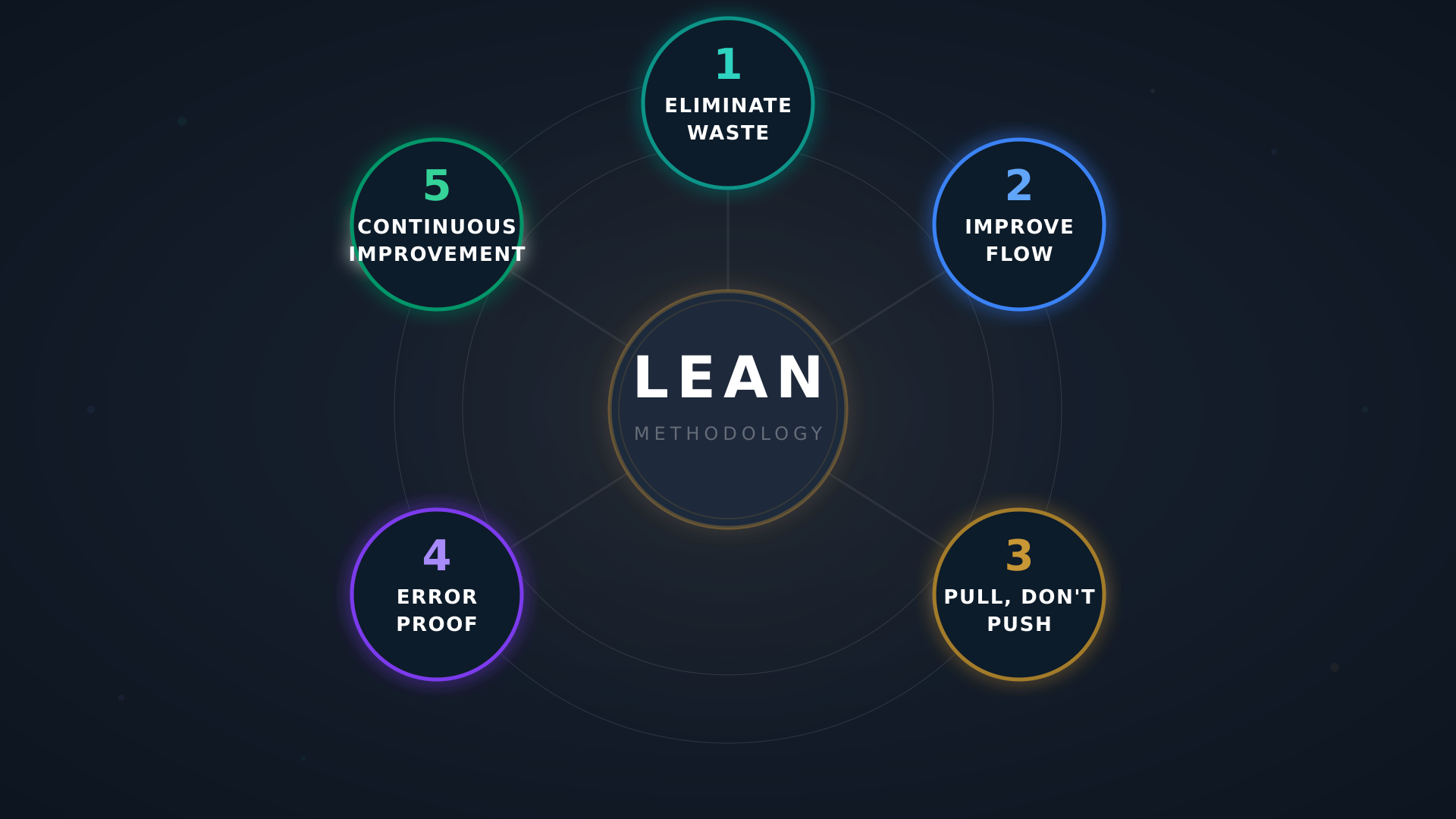
LEAN management principles, originally developed in manufacturing, provide a powerful model for addressing these challenges. Working to eliminate waste, streamline process flow, error-proof, and continuously improve, LEAN offers a way to deliver turnarounds faster, safer, and at lower cost. When combined with advanced non-destructive testing (NDT) methods, including advanced scanning technologies and mechanical properties analysis technologies, operators can transform inspection from a bottleneck into a driver of efficiency and value.
LEAN’s first principle is eliminating waste. In facility turnarounds, waste can frequently be seen in unnecessary repairs, redundant inspections, scaffold builds that go unused, and delays in receiving test results. Traditional destructive testing methods for validating material properties are a prime example. Cutting out a pipe coupon to determine yield strength or fracture toughness is expensive and disruptive. Each cut can require scaffolding, welding, inspection, and requalification — easily costing hundreds of thousands of dollars per location.
NDT mechanical properties technologies offer LEAN alternatives. These portable technologies can measure yield strength, tensile strength, and some even fracture toughness directly on in-service equipment without cutting material. Property data that satisfies regulatory and engineering requirements is immediately available, while avoiding the waste of cutouts, repairs, and downtime.
For scanning technologies, digital radiography (DR) eliminates waste compared with film-based RT, which requires processing, developing, and manual review, often forcing crews to wait hours for results. DR produces instant digital images, allowing repair crews to proceed without costly delays. And Phased Array Ultrasonic Testing (PAUT) and Automated Ultrasonic Testing (AUT) eliminate waste when compared to Manual Ultrasonic Testing (UT).
Improving process flow so that work progresses without bottlenecks or interruptions is also an important LEAN concept. In a turnaround, the inspection program often dictates flow. If inspection results get bogged down, repair crews are idled, and the schedule can increase by days.
Advanced NDT methods improve flow in several ways: Phased Array Ultrasonics (PAUT) enables rapid weld scanning that identifies flaws more quickly than manual UT with more reliable results, reducing rework. Robotics and drones enable inspection of tanks, columns, and flare stacks without scaffolding or confined-space entry, eliminating prep steps and accelerating workflow. Field-deployed nondestructive mechanical properties analysis provides in-situ material property confirmation — instead of waiting days for lab results, engineers can make immediate fitness-for-service decisions.
Many of the NDT methods do not require assets to be shut down to perform their inspections. This can allow turnaround teams to shift part or even the majority of inspection work scope before shutting down equipment, dramatically reducing lost production time, increasing safety by minimizing the time and number of staff deployed, and reducing the direct cost of inspection.
See ABI® Technology in Action
Discover how nondestructive mechanical testing can solve your most challenging material assessment problems — without cutting a single coupon.