
Insights & Publications
Technical deep dives, application notes, and 50 annotated publications spanning 1983 to present.
Obtaining Materials Properties Using an In-Situ Method: Case Studies
Inspectioneering Journal — Vol. 31, Issue 4
Published in Inspectioneering Journal, this article explores the growing demand for NDT services and presents two detailed case studies: validating fitness for service after a catastrophic natural gas pipeline failure, and qualifying A350 steel flanges for offshore low-temperature service using in-situ ABI® testing.
Clark Ellis, Senior Vice President • Fahmy Haggag, Chief Engineer — ABI® Technology
Ensuring Asset Integrity via Non-Destructive Evaluation of Mechanical Properties in Aging Infrastructure
SPE-230088-MS
Co-authored with Occidental Petroleum, this paper presents the Haggag Fracture Toughness Method and three case studies: an offshore flare boom life extension that avoided millions in replacement costs, a 30" flare header hot-tap validation, and cross-verification of high-strength Q125 casing from three global mills.
P. Nicklas, K. Esaklul (Occidental Petroleum) • F.M. Haggag, M.F. Haggag, C.K. Ellis (ABI® Technology)
Ensuring Asset Integrity via NDE of Mechanical Properties in Aging Infrastructure
ADIPEC 2025 Slide Deck
The companion slide presentation covering fitness-for-service needs beyond standard MTRs, the progressive ball indentation method, the Haggag Fracture Toughness Method overview, and detailed case study results with data tables and master curves.
K. Esaklul, P. Nicklas (Occidental Petroleum) • F. Haggag, C. Ellis, M. Haggag (ABI® Technology)
AI? ML? Digital Twins? They All Need Physical Data for Optimal Asset Integrity Results
The Case for Deterministic Data
As AI spending in oil and gas continues to grow, probabilistic models are only as good as their underlying data. This article makes the case for grounding AI, ML, and Digital Twin analytics in current, accurate physical measurements from non-destructive testing.
Clark Ellis & Fahmy Haggag
Combining LEAN and NDT for Faster, More Effective Turnarounds
Operational Efficiency
Facility turnarounds cost millions per day of downtime. This article shows how LEAN management principles — eliminating waste, streamlining flow, and continuous improvement — combined with advanced NDT methods transform inspection from a bottleneck into a driver of efficiency and value.
Clark Ellis — ABI® Technology
Cracks, Cost, and Confidence: Why Fracture Toughness Matters for Infrastructure
The Business Case for FFS
Fracture toughness is the critical material property that determines whether a crack will remain stable or propagate to catastrophic failure. This article explains why tensile data alone is insufficient and how ABI® testing delivers fracture toughness data in-situ — without shutdowns, cutouts, or service interruption.
Fahmy Haggag & Clark Ellis — ABI® Technology
ABI® Technology on the Podcast
Listen to the latest episode featuring ABI® Technology and the non-destructive evaluation of mechanical properties.

AI? ML? Digital Twins? They All Need Physical Data for Optimal Asset Integrity Results
Why automated probabilistic analytics must be grounded in current, accurate, real-world physical data
Artificial Intelligence, Machine Learning, Digital Twin — it’s hard to consume any amount of industry news without encountering one or all of these terms. Every company involved in...
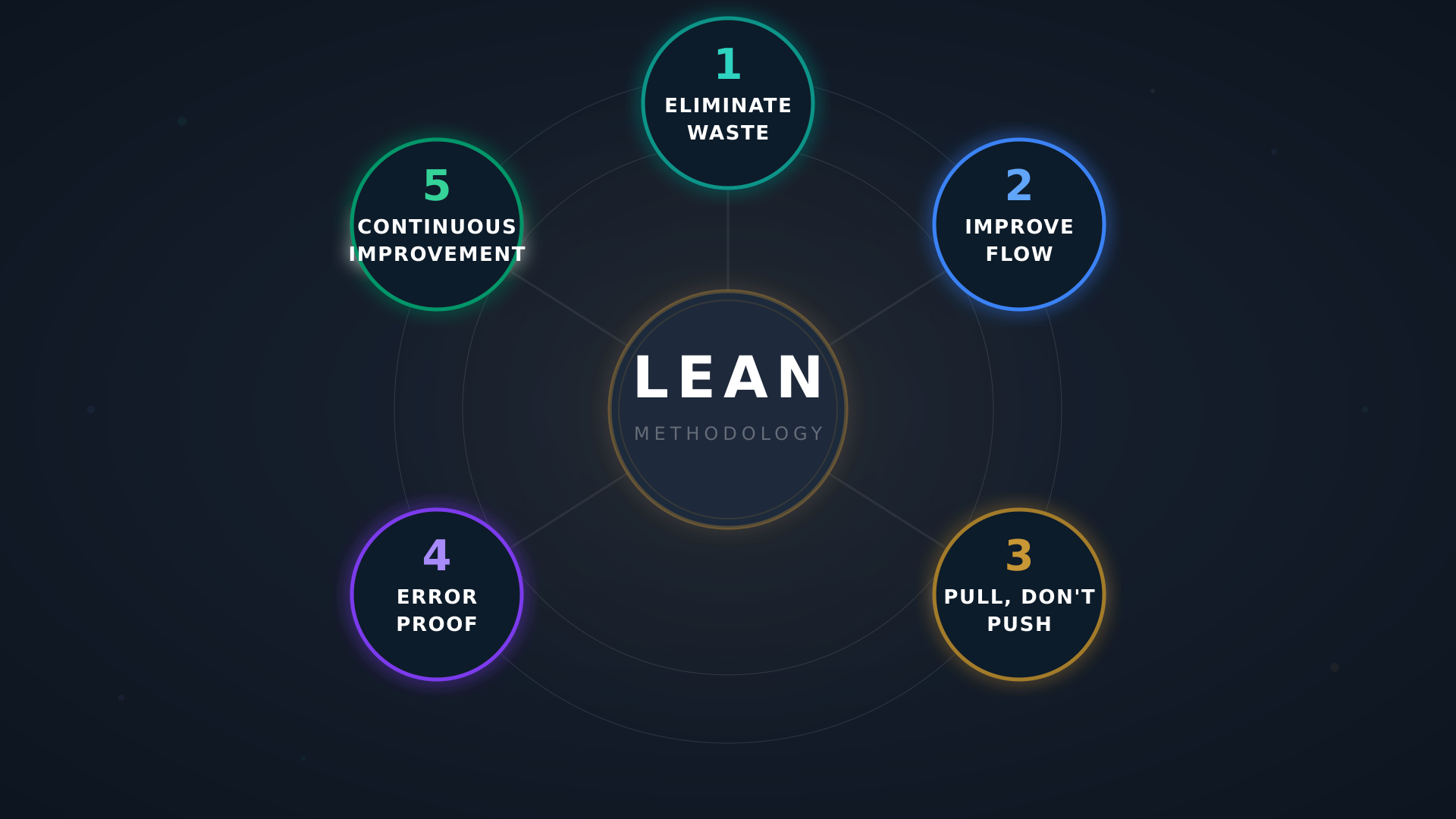
Combining LEAN and NDT for Faster, More Effective Turnarounds
How LEAN management principles and advanced NDT methods transform facility turnaround efficiency
Few events in oil and gas are as costly and complex as facility turnarounds, whether offshore, refineries, gas plants, or petrochemical plants. Each day offline can mean millions o...
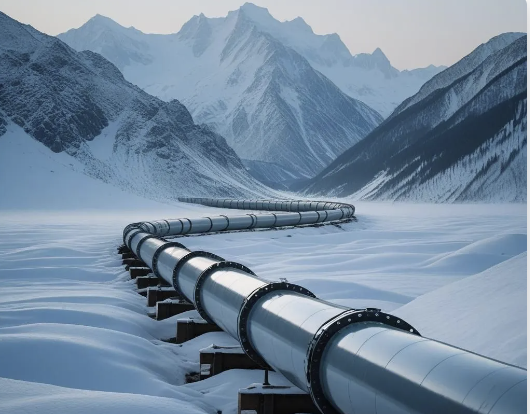
Fracture Toughness Takes on Higher Importance in Cold Temperatures and Other Embrittlement Conditions
Why knowing fracture toughness is crucial for assets operating in cold environments or carrying embrittlement-causing products
Most organizations tend to focus on material grade and tensile properties when evaluating their assets. Traditional means of measuring fracture toughness requires destructive testi...
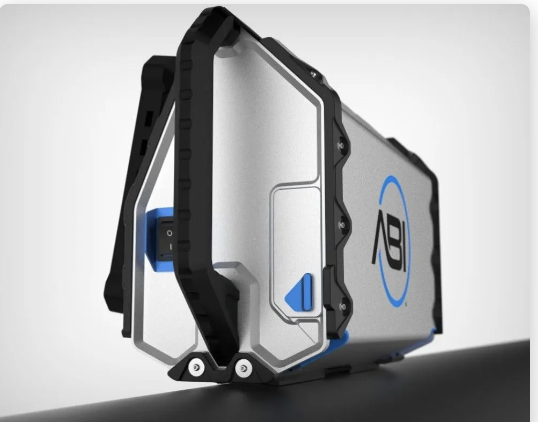
Cracks, Cost, and Confidence: Why Fracture Toughness Matters for Infrastructure
How ABI® testing offers fast, non-destructive, in-service fracture toughness evaluation for safer, cost-effective decisions
Initiation fracture toughness is a physical property of materials which characterizes the amount of deformation energy required to advance the length of an existing crack in a spec...
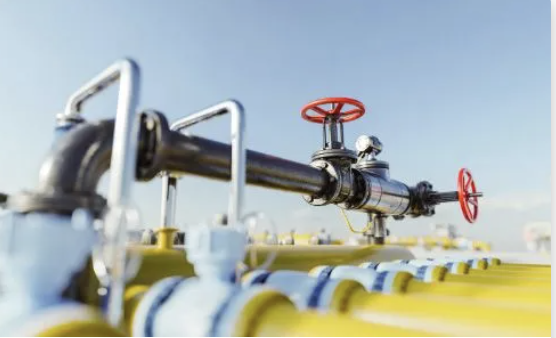
Accurate Determination of the Maximum Allowable Operating Pressure (MAOP) of Oil and Gas Pipelines
How in-situ ABI® testing provides verified SMYS for undocumented pipelines
Maximum allowable operating pressure (MAOP) is the maximum pressure a pipeline can safely operate. The pipe wall thickness (t), Specified Minimum Yield Stress (SMYS), and pipe oute...
Qualify the Operation of Steel Flanges Using In-Situ ABI® Testing
How nondestructive ABI® testing qualified 12 steel flanges for offshore service without destructive sampling
A company operating an offshore oil platform required Charpy V-Notch (CVN) values to qualify steel flanges. However, they could not cut samples to perform the destructive testing. ...
Ensuring Asset Integrity via Non-Destructive Evaluation of Mechanical Properties in Aging Infrastructure
SPE-230088-MS — Presented at ADIPEC 2025 with Occidental Petroleum
As assets age and operating conditions change, assessment for continuous service and life extension necessitate review of equipment integrity and fitness for service. This paper, c...
Obtaining Materials Properties Using an In-Situ Method: Case Studies
Published in Inspectioneering Journal, Volume 31, Issue 4, July/August 2025
As oil prices continue to remain low due to high market supply, producers are pulling back on spending as evidenced by revised earning forecasts and reduced budget spend. While thi...
Nondestructive Onsite Grade Verification for Trenchless Applications
How ABI® testing delivers rapid material verification during excavation and trenchless pipeline operations
Trenchless methodologies represent an innovative and critical approach for the safe and effective management of pipeline infrastructure. The uptake has required collaboration betwe...
Specifying Fracture Toughness and Reference Temperature for Successful Stamping Operations
Why tensile properties alone are not sufficient for steel acquisition — ABI® testing reveals fracture toughness even on 1mm-thick sheets
The goals of this project were: (a) to measure the tensile and fracture toughness properties of two high-strength thin steel sheets and (b) to determine the reference temperature (...
Pressure Vessel Steels (SA508, SA533B, A212)
The primary structural steels used in nuclear reactor pressure vessels.
Carbon Steels (A36, Pipeline Grades)
Low-carbon and medium-carbon structural steels including ASTM A36 and pipeline-grade steels (API 5L grades).
Ferritic Steels (General)
Broad category of iron-carbon alloys with body-centered cubic (BCC) crystal structure.
Stainless Steels (Austenitic & Cast)
Austenitic stainless steels including cast CF-8 and CF-8M (the cast equivalents of Type 304 and 316 stainless steel).
Nickel-Base Superalloys (Alloy 718, Alloy 625)
High-temperature nickel superalloys used in aerospace gas turbine engines, nuclear reactor internals, and demanding high-temperature applications.
Aluminum Alloys
Aluminum alloys in multiple temper conditions, applied to aerospace damage detection.
Zircaloy (Zirconium Alloys)
Zircaloy cladding tubes used in nuclear fuel assemblies.
HSLA Steels (High-Strength Low-Alloy)
High-strength low-alloy steels widely used in structural and pipeline applications.
A350 Steel (Offshore Flanges)
ASTM A350 forging steel used in offshore pipeline flanges and pressure-retaining components requiring low-temperature qualification.
Electronic Solders (Sn-5%Sb)
Lead-free tin-antimony solder alloys used in electronic packaging.
Weldments & Heat-Affected Zones (Cross-Material)
ABI®'s ~1 mm indentation diameter enables characterization of individual weld regions — base metal, HAZ, and deposited weld metal — with spatial resolution that conventional tensile testing cannot achieve.
Determination of Lüders Strains and Flow Properties in Steels from Hardness/Microhardness Tests
Haggag, F.M. and Lucas, G.E.
The foundational paper establishing the core ABI® concept — demonstrating that ball indentation can quantitatively extract Lüders strain and the full true-stress/true-plastic-strain curve from small steel specimens.
Measurement of Through-the-Thickness Variations of Mechanical Properties in SA508 Gr.3 Pressure Vessel Steels Using Ball Indentation Test Technique
Byun, T.S., Hong, J.H., Haggag, F.M., Farrell, K., and Lee, E.H.
KAERI/ORNL collaborative study demonstrating ABI® can detect spatial gradients in yield strength, UTS, and flow curve across the thickness of reactor pressure vessel forgings.
Non-destructive Determination of Tensile Properties and Fracture Toughness of Cold Worked A36 Steel
Murty, K.L., Mathew, M.D., Wang, Y., Shah, V.N., and Haggag, F.M.
NC State/IGCAR study showing ABI® correctly tracks strength increases and toughness decreases caused by cold working in A36 structural steel across a wide temperature range.
Indentation-Energy-to-Fracture (IEF) Parameter for Characterization of DBTT in Carbon Steels Using Nondestructive Automated Ball Indentation (ABI®) Technique
Haggag, F.M., Byun, T.S., Hong, J.H., Miraglia, P.Q., and Murty, K.L.
Introduces the Indentation-Energy-to-Fracture (IEF) parameter — Haggag's method for extracting ductile-to-brittle transition temperature (DBTT) directly from ABI® data without requiring separate Charpy specimens.
Characterization of Gradients in Mechanical Properties of SA-533B Steel Welds Using Ball Indentation
Murty, K.L., Miraglia, P.Q., Mathew, M.D., Shah, V.N., and Haggag, F.M.
Demonstrates ABI®'s unique capability to map property gradients across narrow weld heat-affected zones — identifying a toughness minimum ~1 mm from the fusion line.
Use of Automated Ball Indentation Testing to Measure Flow Properties and Estimate Fracture Toughness in Metallic Materials
Haggag, F.M., Nanstad, R.K., Hutton, J.T., Thomas, D.L., and Swain, R.L.
The seminal ASTM STP paper introducing the automated, instrumented ABI® system to the testing community.
In-Situ Measurements of Mechanical Properties Using Novel Automated Ball Indentation System
Haggag, F.M.
Presents the ABI® system in the context of nuclear power plant life extension and thermal annealing programs.
Effects of Irradiation Temperature on Embrittlement of Nuclear Pressure Vessel Steels
Haggag, F.M.
Uses ABI® to characterize how irradiation temperature affects embrittlement in RPV steels by measuring DBTT shifts.
Use of Portable/In-Situ Stress-Strain Microprobe® System to Measure Stress-Strain Behavior and Damage in Metallic Materials and Structures
Haggag, F.M., Wang, J.A., Sokolov, M.A., and Murty, K.L.
Introduces the portable field-deployable SSM® system and marks the transition from laboratory instrument to field-deployable commercial technology.
Structural Integrity Evaluation Based on an Innovative Field Indentation Microprobe
Haggag, F.M., Nanstad, R.K., and Braski, D.N.
First public presentation of the Field Indentation Microprobe (FIM) hardware concept combining ABI® testing with NDE ultrasonic transducers and video.
Estimating Fracture Toughness Using Tension or Ball Indentation Tests and a Modified Critical Strain Model
Haggag, F.M. and Nanstad, R.K.
Presents the Modified Critical Strain Model for estimating J-integral fracture toughness from ABI-derived flow curves.
Integrating Automated Ball Indentation with ASME B31G Code to Assess Remaining Integrity of Corroded Pipelines
Haggag, F.M. and Phillips, L.D.
Demonstrates a complete fitness-for-purpose workflow combining in-situ ABI® yield-strength measurements with ASME B31G corrosion assessment calculations.
Innovative Nondestructive Method Determines Fracture Toughness of In-Service Pipelines
Haggag, F.M. and Phillips, L.D.
Demonstrates ABI®'s dual capability for pipeline operators: both yield strength and fracture toughness from a single in-situ test.
The Use of Field Indentation Microprobe in Measuring Mechanical Properties of Welds
Haggag, F.M., Wong, H., Alexander, D.J., and Nanstad, R.K.
Establishes ABI®'s capability to characterize weld microstructural zones with millimeter-scale spatial resolution in HSLA steel welds.
Application of Flow Properties Microprobe to Evaluate Gradients in Weldment Properties
Haggag, F.M.
Extends weld characterization work to broader materials and weld types, demonstrating the SSM®'s practical utility as a weld quality assessment tool.
Measurement of Yield Strength and Flow Properties in Spot Welds and Their HAZs at Various Strain Rates
Haggag, F.M. and Bell, G.E.C.
Demonstrates ABI® measurement on resistance spot welds with strain-rate sensitivity data relevant to automotive crashworthiness.
Characterization of Strain-Rate Sensitivity of Sn-5%Sb Solder Using ABI® Testing
Haggag, F.M.
Expands ABI® applications to electronic solder materials, demonstrating characterization of creep-prone materials relevant to electronic packaging reliability.
A Novel Stress-Strain Microprobe® for Nondestructive Evaluation of Mechanical Properties of Materials
Haggag, F.M.
Overview paper introducing the SSM® system to the broader NDE community with results across diverse alloy classes.
Non-destructive Evaluation of Deformation and Fracture Properties of Materials Using Stress-Strain Microprobe®
Murty, K.L., Mathew, M.D., Miraglia, P.Q., Shah, V.N., and Haggag, F.M.
Comprehensive NC State review of ABI®/SSM® validation data across multiple alloy classes, emphasizing ABI® as a practical tool for life management of aging infrastructure.
Nondestructive Detection and Assessment of Damage in Aging Aircraft Using a Novel Stress-Strain Microprobe® System
Haggag, F.M.
Demonstrates ABI® on aging aircraft structural components, establishing the aerospace application case.
Welding Procedure Qualification and In-Service Weld Integrity Assessment Using Innovative Nondestructive SSM® Technology
Haggag, F.M.
Demonstrates SSM® technology for welding procedure qualification and weld integrity assessment in the European industrial context.
In-Service Nondestructive Measurements of Stress-Strain Curves and Fracture Toughness of Oil and Gas Pipelines: Examples of Fitness-for-Purpose Applications
Haggag, F.M.
Pipeline-focused paper demonstrating ABI®'s early commercial deployment in the international oil and gas sector on operating Middle Eastern pipelines.
Innovative SSM® Technology Determines Structural Integrity of Metallic Structures
Haggag, F.M.
Regional conference paper contributing to ABI®'s growing adoption across the Middle East and North Africa.
In-Situ Monitoring of Hydrogen Embrittlement in Ferritic Steel Pipelines
Haggag, F.M.
Demonstrates ABI® can detect and quantify hydrogen-induced strength changes and toughness degradation in ferritic pipeline steels.
In-Situ ABI® Testing of A350 Steel Flanges at Ambient Temperature for Offshore Qualifications at -46°C (-50°F)
Haggag, F.M.
Demonstrates that ambient-temperature ABI® measurements can reliably predict low-temperature fracture behavior for offshore flange qualification.
Indentation technique provides pipeline integrity monitoring
Haggag, F.M.
Industry-facing article explaining ABI® pipeline applications to the Oil & Gas Journal's engineering audience.
Microprobe system measures strength and toughness
Haggag, F.M.
Materials-engineering trade publication feature covering the SSM® system's capabilities across industries.
In-Situ ABI® Testing to Determine Yield Strength, Pipe Grade, and Fracture Toughness of In-Service Oil and Gas Pipelines
Haggag, F.M.
Russian-language trade publication demonstrating ABI® applications on Russian pipeline infrastructure.
In-Situ Nondestructive Measurements of Key Mechanical Properties of Pressure Vessels Using Innovative Stress-Strain Microprobe® (SSM®) Technology
Haggag, F.M.
DOE SBIR Phase I/II final report establishing the commercial SSM® system's validation for nuclear pressure vessel applications.
Nondestructive and Localized Measurements of Stress-Strain Curves and Fracture Toughness of Ferritic Steels at Various Temperatures
Haggag, F.M.
The most comprehensive single validation document for ABI®/SSM® temperature performance, testing from -130°C to +288°C.
Nondestructive Determination of Fracture Toughness of Alloy 718 Welded Structures
Haggag, F.M.
Extends ABI® validation to Alloy 718 (Inconel 718) — a high-temperature nickel superalloy used in aerospace turbines and nuclear components.
Computer Controlled Indentation System
Haggag, F.M.
NAVAIR SBIR program report documenting development of a ruggedized ABI® system for Navy applications.
Nondestructive Determination of Yield Strength and Stress-Strain Curves of In-Service Transmission Pipelines
Haggag, F.M.
The pivotal DOT/OPS report demonstrating ABI®'s pipeline yield strength capability on actual in-service transmission pipelines.
In-Situ Measurement of Tensile and Fracture Toughness Properties and Determination of Pipe Grade Using the Innovative ABI® Test
Haggag, F.M.
GTI-funded independent validation study confirming ABI® results for pipe grade determination on representative gas pipeline steels.
In-Situ Measurement of Pipeline Mechanical Properties Using SSM® — Validation of Data for Increased Confidence & Accuracy
Haggag, F.M., et al.
The six-laboratory interlaboratory round robin study — the most important single validation document for pipeline industry adoption.
Field Indentation Microprobe for Structural Integrity Evaluation
Haggag, F.M.
The foundational intellectual property document for ABI® technology, claiming the complete Field Indentation Microprobe system.
The ABI® Test Method: Determining Fracture Toughness and the Master Curve with Applications in Several Industries
Haggag, F.M.
Comprehensive monograph covering 40 years of ABI® methodology development including the HTTM standard specification.
Standard Test Methods Using Haggag Tensile and Toughness Method (HTTM)
Haggag, F.M.
The HTTM Standard specification — ABI® Services' formal standard aligned with ASTM E636-14, incorporating precision data from the L52280 interlaboratory study.
Structural Integrity Evaluation Based on an Innovative Field Indentation Microprobe (ORNL)
Haggag, F.M. and Nanstad, R.K.
The earliest broadly-cited ABI® conference paper, establishing the technology's profile in the nuclear pressure vessel community.
Nondestructive Evaluation of Mechanical and Fracture Characteristics of Ferritic Steels Using Automated Ball Indentation Testing
Haggag, F.M.
ANS transactions paper summarizing ABI® validation on ferritic steels for nuclear structural applications.
A Theoretical Model for Determination of Fracture Toughness of Reactor Pressure Vessel Steels in the Transition Region from Automated Ball Indentation Test
Byun, T.S., Kim, J.W., and Hong, J.H.
KAERI's own theoretical framework for extending ABI® fracture toughness estimation to the ductile-to-brittle transition region.
Estimation of Fracture Toughness Transition Curves of RPV Steels from Ball Indentation and Tensile Test Data
Byun, T.S., Kim, S.H., Lee, B.S., Kim, I.S., and Hong, J.H.
Tests span -160°C to +25°C on six actual RPV steels, demonstrating ABI-derived fracture toughness curves match conventional test data.
Nondestructive Monitoring of Structural Materials Using Automated Ball Indentation (ABI®) Technique
Murty, K.L. and Mathew, M.D.
The landmark independent validation paper — the definitive multi-material proof of concept for ABI® technology.
Standard Guide for Conducting Supplemental Surveillance Tests for Nuclear Power Reactor Vessels
ASTM International
The primary ASTM standard governing supplemental nuclear reactor vessel surveillance, with which ABI®/HTTM is explicitly compliant.
Pipeline Mega Rule — 49 CFR §192.607
U.S. Department of Transportation / PHMSA
The federal regulation establishing nondestructive testing requirements for pipeline material verification — requirements that ABI®/SSM® satisfies.
PRCI Report L52280 — Six-Laboratory Round Robin Study
Pipeline Research Council International
The six-laboratory round robin study providing a formal precision statement — the statistical backbone for ABI®'s use in regulated applications.
Why the Hardness Test Cannot Determine Yield Strength
Haggag, F.M.
Explains why conventional hardness testing cannot determine yield strength — a critical distinction for pipeline grade verification under PHMSA regulations.
Accurate Determination of the Maximum Allowable Operating Pressure (MAOP) of Oil and Gas Pipelines
Haggag, F.M.
Explains why ABI® testing is a field-deployable technique that provides the yield strength data required for accurate MAOP calculation under 49 CFR Parts 192 and 195.
Comments on PHMSA's Proposed Integrity Verification Process (IVP) for Oil and Gas Pipelines
Haggag, F.M.
Technical comparison of ABI® testing versus hydrotesting for pipeline integrity verification following the 2010 San Bruno, CA pipeline explosion.
Background of the Stress-Strain Microprobe® (SSM®) Technology and Its Haggag Test Method (HTM)
Haggag, F.M.
Comprehensive background document covering the SSM® technology's development, validation, awards, precision data, and commercial deployment history from 1989 to 2018.