
Fracture Toughness Takes on Higher Importance in Cold Temperatures and Other Embrittlement Conditions
Why knowing fracture toughness is crucial for assets operating in cold environments or carrying embrittlement-causing products
Most organizations tend to focus on material grade and tensile properties when evaluating their assets. Traditional means of measuring fracture toughness requires destructive testing which is costly, time consuming, and often requires assets to be shut down while the tests are conducted. Because of these constraints, fracture toughness testing is done infrequently.
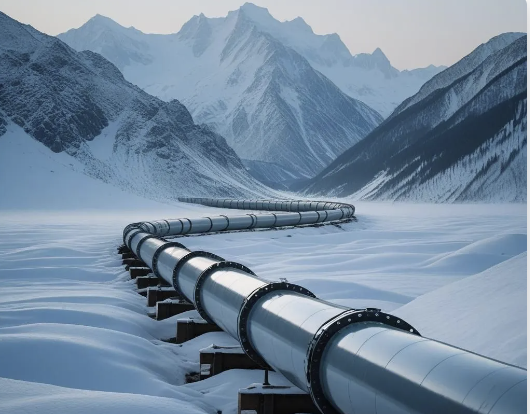
However, when assets are operated in cold environments offshore, in extreme northern geographies, or that involve carrying or processing products that are either transported at low temperatures or can cause embrittlement, knowing the fracture toughness of the asset material is crucial to safe operations. Pipeline steels (e.g. API 5L Grades) become more susceptible to hydrogen-assisted cracking (HAC) at an accelerated rate in colder environments.
Operators can use lower cost Non-Destructive Testing (NDT) methods like Automated Ball Indentation (ABI®) to increase the testing frequency for assets that are operated under cold temperatures or that carry products that accelerate embrittlement or are very cold, themselves. This produces more data that can provide direct insights into the fracture toughness and Fitness for Service (FFS) for those assets. The data can also feed asset integrity analytics systems that can help predict asset behavior and can prevent incidents and improve overall system safety and productivity.
Case Study: Hydrogen Embrittlement Analysis Using ABI®
Monitoring hydrogen embrittlement is required for the safe transmission of hydrogen in ferritic steel pipelines. Given that the chemical composition and microstructure of pipeline steels are key factors affecting their susceptibility to hydrogen embrittlement, several grades of pipe were investigated, and their tensile and fracture toughness properties were non-destructively measured as a function of exposure time to hydrogen pressure.
Grade X80 steel was received from a commercial vendor who performed destructive fracture toughness testing on the material (outer diameter of 406 mm and wall thickness of 14.6 mm). Destructive testing showed that the fracture toughness decreased from 225 MPa√m (zero hydrogen pressure) to 118 MPa√m (13.79 MPa or 2000 psi hydrogen pressure), i.e. a 48% reduction due to hydrogen embrittlement.
The ABI® method and hydrogen chamber have several advantages over conventional destructive testing: nondestructive, in-situ, use of a very small volume of hydrogen per experiment, use of multiple pipeline steel specimens exposed to the same hydrogen pressure and purity per single experiment, and the ability to conduct multiple ABI® tests on each disc sample.
See ABI® Technology in Action
Discover how nondestructive mechanical testing can solve your most challenging material assessment problems — without cutting a single coupon.