
Cracks, Cost, and Confidence: Why Fracture Toughness Matters for Infrastructure
How ABI® testing offers fast, non-destructive, in-service fracture toughness evaluation for safer, cost-effective decisions
Initiation fracture toughness is a physical property of materials which characterizes the amount of deformation energy required to advance the length of an existing crack in a specimen or a structural component. Sharp cracks in a steel structure might advance, due to service conditions, either slowly in a ductile fashion or quickly/catastrophically in a brittle/cleavage fashion depending on the flow properties, temperature, and applied stresses. Fracture toughness, therefore, is essentially the ability of the material to resist cracking whether slowly or quickly.
All materials, no matter how they are processed, inherently contain a certain amount of flaws. These could be a metallurgical inclusion, void, a crack, or any combination. Since flaws cannot be avoided, engineers often use a specific flaw size and number of flaws to design critical components. To ensure that materials meet the requirements for their applications, two frameworks are used: Fitness for Service (FFS) and Risk Based Inspection (RBI). Data critical to FFS and RBI include fracture toughness, yield strength and other mechanical properties of a specific material. This provides the data that owners need to make informed decisions about whether to continue operating a piece of equipment, such as a pipeline or process equipment, or structure, by increasing the inspection cadence, or shutdown to repair or replace a component.
For example, in evaluating the FFS of a pipeline that has a small pit or a small crack, the specified grade of the pipe is only a starting point. It defines the minimum ability of the designed pipe to withstand the operating conditions. Knowing the actual fracture toughness properties enables the operator to know with confidence (based on accurate Level 3 FFS) that they can continue operating a pipeline that has a minor anomaly without having to shut it down for an immediate repair or replacement. If this allows the operator to schedule a repair for a planned shutdown that occurs in 3 months, that can save hundreds of thousands of dollars if not millions of dollars in lost production or transmission service.
RBI programs are similarly impacted by having accurate fracture toughness data for specific equipment, pipelines or vessels. Knowing the true strength of a component allows the operator to design and adjust its RBI resource allocation model for the most appropriate inspection cadence. This allows the most effective use of its inspection methods and resources, ensuring that they are deployed where they are most needed.
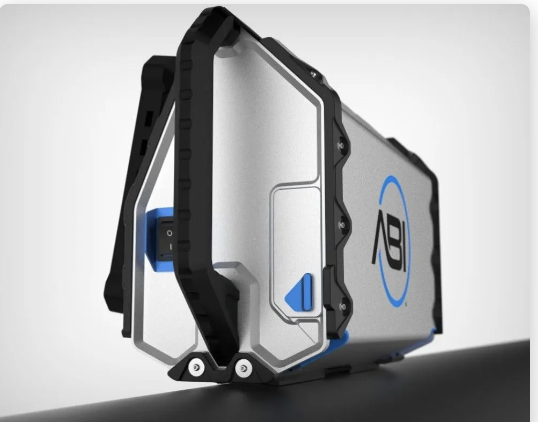
ABI testing provides a rapid, nondestructive method for measuring fracture toughness directly on in-service assets. The test can be performed in the field without cutting samples, shutting down operations, or waiting for lab results. This makes it practical to gather fracture toughness data across many locations on a pipeline or facility, giving operators the information they need for confident, cost-effective integrity decisions.
See ABI® Technology in Action
Discover how nondestructive mechanical testing can solve your most challenging material assessment problems — without cutting a single coupon.